Monday, December 1, 2014

Final Blog Post


"Exploring Your Digital Toolbox" Class Reflection


Professor Calderwood's class, "Exploring Your Digital Toolbox," was an introduction to the digital side of professionalism. This class has been an asset for my future, but more importantly, for my current job. We were first introduced to Twitter, Personal/Professional Learning Networks (PLN), as well as different methods of posting personal blogs online. We also had various live discussions via Google + with educators and other professionals who utilize PLN's. We were then taught about our digital "footprint". This is something many people overlook when posting media and personal opinions. We went over precautions to take while navigating the web, such as avoiding geo-tagging if necessary.This is so the internet can work for you, rather than against you when you apply for a professional position. I was just around this time in class when I was going for my interview for the position I currently have. This brought me some frantic awareness, resulting in me checking my footprint and reassessed the setting I had on social sites.


Throughout the first month of class, we covered many of the essential Google tools to aid in our professional endeavors and development. We dove into the many applications and features available to all users of Google. Some tools presented were Google +, Google docs, Google Sheets, Google Slides, and Google Forms. In addition to these Google apps, we were shown useful Google Chrome extensions. Some extensions that were shown are Readability, TLDR, SplitScreen, Tabcloud, Snag-it, Stickynotes, Adblock Plus, and Pocket. I use some of these apps now at work and for school extensively.


Our class also had the privilege to speak with some notable professionals this semester. These professionals were picked by Professor Calderwood to relate to the various majors held by my classmates. Each speaker would talk about how they utilize social media for their PLN and also various applications we can utilize. We were also given the opportunity to ask questions, which was great. Some of the speakers who chatted with us using Google Hangouts are Gretchen Thomas, Melissa Murphy, Kate Baker, David Malone, Adam Taylor, Caleph Wilson, Jaime Casap, and Scott Rocco. Jamie Casap, from Google, was probably the most useful in regards to being relevant to my major. He answered a lot of my concerns regarding overindulgence of technology.


Throughout the class, we have had a number of in-class projects and assignments. We also had some out-of-class assignments, which we would occasionally present in class. To aid us with creating effective presentations for class, we were introduced to applications Haiku Deck, Prezi, PowToon, Emaze, Keynote, Prezentit, SlideRocket, and Educreations. For my first presentation in October, I used Google Slides. I also used Slides for my Social Media Etiquette project. Educreations was another tool I used when making a tutorial on how to make french toast. Another project was completed using the storytelling app Pixton. This was a comic strip narrated by me, advocating for Stockton's computer science program. These applications are all very noteworthy, but I am still a huge Google Slides and PowerPoint junkie! 


We are currently working on creating a website that essentially promotes ourselves in the digital professional world. I am using Wix, which is an awesome online website editor. In conjunction with our websites, we need to add the social networking sites outlined in our course. Linkedin and about.me are two sites that I think will serve me well when I graduate.
Our bi-monthly "App Smackdowns" were a challenging task. Professor Calderwood asked us to find an application relating to our major, and to present it to the class. This allowed us to train ourselves to find useful information relating to our field. For me, finding computer science apps were the biggest issue. It seems that there isn't a huge collection of C.S. apps out there yet. Some of the applications I presented were Treehouse, Tynker, Wikr, and Sensor Box for Android, I can honestly say I have only used two of these applications after the week I presented them. I do now look through the app store more often for them, something I would never do prior to this class.


"The Connected Educator," and Untangling the Web, were the two textbooks assigned. These texts went over various applications for professionals to utilize and how to be up to date with our current technological age. I think these books were geared more towards educators, rather than just students, but I took away some valuable information nonetheless. Untangling the Web introduced me to a web-based curation tool called Symbaloo. I still use Symbaloo to this day to hold my different website links for different areas of life. 


Overall, I have learnt a great deal of information that I can carry into the workplace. Developing a PLN has helped learn to connect and learn from the professionals I soon hope to be. I think this course is very good for anyone who wants to become a more connected professional. I think the most valuable tools I have taken away from this class is the apps within Google Drive, Evernote, Symbaloo and forming my PLN on Twitter. I think all of these apps offer the end user the ability to collaborate, curate, and store other valuable information on the cloud for mobile use. I have already impressed my boss with some of these applications, and plan to continue the trend! The most notable part of this class was when we had a maker space. We used Makey Makey's to build a circuit, and eventually used that circuit to successfully develop a cardboard guitar controller and played it in a game!

Monday, November 24, 2014

Week 11 Blog Post

Self Promotion and Website Creation 


On Tuesday, Gretchen Thomas, a professor at The University of Georgia, chatted with us in a Hangout session. It was good to see a professor who is instructing a class that is similar to ours. She had some time free in her schedule, so the conversation was just to get acquainted. 


Following our chat with Gretchen, we went over the various web-based editing sites available to create our very own site. Our site will essentially promote ourselves for professional purposes. Weebly, Wix, and Wordpress are sites that we advised to use. Each site mentioned offers an intuitive user interface, allowing the end user to have zero knowledge of any code. This is particularly good for business owners or upcoming professionals who cannot afford to hire a web developer. I chose to use Wix, as I have some experience with this editor. I was actually hired by Murray Grove to edit their site with this editor, and it turned out nicely. 


On Thursday, the class was supposed to have our bi-monthly "App Smack-down." Instead, we were to group up and prepare for an in class assignment. John AndersonEmily Dellane and I were instructed to pick two websites from a list displayed on the front of the classroom. We were then told to compare the two websites, listing four pros and four cons relating to their overall look. Our document compared the sites of JK Rowling and Bill Selak. We then presented our findings to the rest of the class and received feedback thereafter. It was a great experience to analyze the details of personal biography websites.I think this has better prepared me for when I create my own.


We were also assigned to read chapter 9 of "The Connected Educator," by Sheryl Nussbaum-Beach and Lani Ritter Hall. This chapter discusses how the internet has become a resourceful place for education. It also highlights how it changes the learning dynamic of individuals who utilize it. There are four core components discussed: knowledge, pedagogy, connections, and capacity. As a computer science major, I know it is imperative to stay relevant in the realm of new technological breakthroughs. If you fail to stay connected, you become an invaluable asset to a company. The same goes for educators. Why would a student want dated information or instruction?


The article I read from the Livebinder is titled "8 Fresh Web Design Tips from Wix Pros to Share on Twitter." The tips given were: emulate other sites, use accent colors, resist typefaces, less is more, achieve symmetry, build from the background out, integrate usability, and build a project timetable.I definitely learned some creative ideas that I did not harness when building the site for Murray Grove. I think knowing how to utilize a site, and executing a stylish look are two different skill sets that need to be learned.   


Monday, November 17, 2014

Week Ten Blog Post

Gather Your Information and Share!

This past Tuesday, Scott Rocco, a superintendent and adjunct professor, showed the class some valuable apps that can be utilized as a professional. The apps shown were  PadletBufferAwesome ScreenshotPocket, and DoodlePadlet is an application that gives the user a collaborative environment to share files, text, and other media. It seems really resourceful for brainstorming with colleagues or classmates. The next app shown was Buffer. This application lets you schedule your tweets sporadically throughout the day. Next on the list was Awesome Screenshot. This application allows the user to take screenshots, similar to the snipping tool application within windows. The upside to this app is that it allows you to record audio and video, rather than only a single picture. The next application was called Pocket. This application allows you to save articles and other things you want to look at later. This seems invaluable for when you're in a rush and need to put procrastination on hold. Last but not least, Doodle was introduced. Scott gave us an interactive tutorial showing us how this scheduling application works. When a manager wants to host a meeting, every co-worker goes to a provided link and then specifies what times they are available for a meeting. When every co-worker has put in their availability, the application will provide an ideal time to meet, according to everyone's availability.


Following our guest speaker, Professor Calderwood introduced Diigo and IFTTT.  Diigo is a curation tool that keeps all of your important read material in one place. It allows you to search for content at a later time, as well as collaborate your data with others. Next, he introduced my favorite app presented on Tuesday, IFTTT. "If Then Then That" allows the internet to do alot of meticoulous work for you. You can link various online applications together, allowing you to create very neat "recipes." I now have it to when I post on Instagram, I automatically post on Facebook as well. I also set a recipe to change the background of my phone every time a new post on Reddit emerges.


On Thursday, Professor Calderwood presented some applications that really can help me with my current job. The application he displayed were canvapiethistweroid tchat,swayy,  everypostpiktochart,  storify, tagboard,compfight, , and paperli. Canva is an awesome application that allows you to create visual representations of data like never before. Various programs provided By Microsoft often become a headache to use. Thank to Canva, I can create charts for Stockton, without it being so time consuming. Piethis is a heaven-sent for the workplace. I have always wondered how we could utilize web-chat in the office, and Piethis offers a great interface for this. I plan to introduce this application to my operations manager to see what she thinks. Because I don't want to make this blog too wordy, I will only mention one last favorite of mine, Compfight. It has always been a struggle for me to find quality image files that weren't a legal issue for External Affairs. This site allows you to search for clip art that you can utilize without worry of using owned media. I plan to use this site as my go-to!


The article I chose to read  was"How To Become a Paper.li Publisher – Five Simple Steps." This article goes to explain how the service lets you combine news from several sources using keywords and hash tags to find content matching your theme. The first step to creating your first newspaper is creating an account. You can connect with your Twitter or Google account. Step two is to find your sources. You can search hash tags, RSS feeds, Facebook posts, and Twitter accounts. Step three is to fine-tune your paper. This includes setting the frequency of your posts, changing the theme and title. The final step is to curate. This means deleting any posts posts or articles that aren't relevant to your theme. You can blacklist sources as well. I personally think this is a great way to tune into specific areas of interest and gives you the ability to share those interests with others.

Monday, November 10, 2014

Week Nine Blog

Week Nine Blog


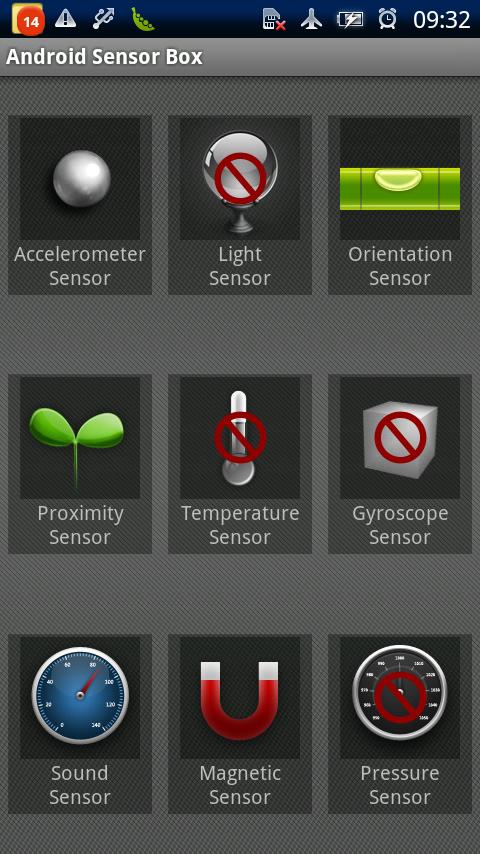
This week was held as a hybrid. We were in class on Tuesday and had class online on Thursday. On Tuesday, we had another "App Smack-down." I presented Sensor Box for Android,which is a sensor diagnostics tool for mobile devices running Android OS. It gives an array of options that give any user the ability to test every sensor on on their device. This is beneficial for many reasons. For example if you ever come across a time where where your screen wont shut off when you put it against your face, there is a test for that, There is an option to test the proximity sensor, which senses how far away an object is away from the phone. If the test yields bad results, you can now diagnose your phone for a future repair. Other tests include, accelerometor, light, orientation, temperature, gyroscope, sound, magnet, and pressure.


         On Thursday, we had to watch an online Google Hangouts sessions about story telling  applications. It was a call between professor Calderwood and speakers, Hannah Clemmons, Jonathan Wylie, and Shannon McClintock Miller. The tools they outlined were Animoto, ToonTastic, and FlipSnack. All of these apps offer various ways to present information to an audience with an animated interface. If executed properly, the presentation can be an effective tool in conveying a message. For our assignment, we had to tell prospective Stockton freshman why our major is the best choice. My presentation was about the computer science program.
digital-storytelling-1.jpg
        For my Livebinder reading, I chose "10 Apps & Sites for Digital Storytelling & more!" This was a great article, explaining the ins and outs of digital story telling. This article answered the following questions: What is digital storytelling, why use digital storytelling and which tools are best?  This gave me a good idea, with exception to the Google Hangout video, of what digital storytelling was all about. Following that, Erin Klein lists her top ten favorite storytelling apps.


       Then, in Chapter 4 of our textbook " Untangling the Web," the social web is discussed. The first application this chapter mentions is TodaysMeet. It allows teachers to create a "back channel" that gives educators the ability to discuss and document classroom interactions. Not a bad tool for educators, as it is apparently one of the simplest tools you can use.The next tools mentioned are Skype and Kidblog, Skype has its' various benefits, as we have discussed the benefits of this app in previous sections. Kidblog, on the other hand, allows the educator to establish safe spaces for students to share online that can be moderated at the discretion of the teacher.  Lastly, there is Edmodo and Twitter. Edmodo can be said to be Blackboard on steroids. I really do understand why Edmodo is preferred as a learning management system. IT offers a seamless user interface and offers intuitive functionality.  Twitter can be termed a micro-blog, due to its 140 character limitation. We, as a class have been utilizing this network the entire semester. 

Monday, November 3, 2014

Week Eight Blog Post


Social Media Etiquette and Online Tools


This week in class was a bit different, as Professor Calderwood was in the UK on Tuesday with Google. Having Tuesday off was nice, but there's always work to be done. On Thursday, the class presented finished projects regarding social media etiquette. I took a lot of time to prepare the slides, but when it came time to present, I had some technical difficulties.


I decided to use Google Docs to present my project, made it an effort to make things look smooth. To utilize notes on my tablet, I realized it was necessary to to run several instances of Teamviewer on a dual screen monitor and stream it via my tablet and podium. This method didn't serve me as well as I had wished. I spent much of my time trying to use my tablet to transition the slides, and had a hard time reading the tiny sized notes. It just goes to show that there is such a thing as too much tech. Nevertheless, presenting wasn't a huge anxiety because I felt like I had prepared my slides well enough.


My project was regarding the incident of "The Donglegate." This event involved two male attendees at software development conference PyCon, made a an inappropriate joke. Tech developer Adria Richards was offended by the jokes and posted her feelings on Twitter. The backlash was extreme and one of the men was fired. She was also fired for "publicly shaming the offenders,"SendGrid CEO Jim Franklin said in a blog post. the second part of the presentation highlighted on preventative measures and administrative action.


We also had reading from our chapter five of Connected Educator, "Using Tools to Support Connected Learning." Firstly, Delicious and Diigo were mentioned as being useful collaborative tools for documenting and archiving the information you stumble upon. This section reminds me a lot of the curation chapter we had read previously. Having what information you want available is an essential part of being an effective student and professional. Having the ability to to share your information with others is a huge benefit of using these two tools.

Being able to report your research publicly is also an effective way to show others in your field what you're working on and what interests you hold. Doing so will provide the professional with feedback, allowing them to build on their skills and research. Blogger, Wordpress, and Tublr are all good examples of online blogging tools. Google Docs is a collaborative tool that Matt Waldron and myself are using for our Statistics project. Having information for us all in one place, and the ability to work simultaneously is priceless. As a side note, I like how Taylor Binet pointed to Google Alerts in her blog. Knowing when your name is being used on the web can be great in nipping unwanted content in the bud.

Monday, October 27, 2014

Week 7 Blog Post

This week, Professor Calderwood started off the class on Tuesday by showcasing Daqri, ColARmix, Aurasma, Drawing Pad, Adobe Ideas,Nearpod, Quizlet, Educreations, and Teamviewer. Most of these apps were foreign to me, but I am familiar with the last two mentioned. Daqri is an awesome 3D model showcase application. It lets you scan models from a printed sheet of paper, and gives users the ability to show them via camera on any mobile device. It was mentioned that users could create their own from scratch as well.


Teamviewer was briefly mentioned, but I have a great amount of experience with it. I am actually writing this blog post using it. Basically, it lets you connect to your computers remotely through any device capable of hosting the application. It gives you an array of options to mirror the experience of actually being on the accessed PC. It is an invaluable tool that performs a great service, for little to no cost.


As a project, we had to create a presentation in Educreations. My group did a tutorial on how to make french toast, lasting two minutes in length. The web based application was too glitchy for my use. I resorted to using the iPad version because I had spent around two hours recreating the same tutorial, trying to iron out the flaws. Overall, it has its uses in displaying visual information nicely, but the creation process was too length.


On Thursday, we had a conversation with Jaime Casap. He is the Global Education Evangelist working for Google. It was an interesting conversation because he has experience within the computer science sector. I had asked several questions, asking for his opinion on various areas of being a professional. One part of the conversation I enjoyed hearing was his reliance on technology to direct his day to day activities. I have felt that my reliance on technology to hold my information would hinder my ability to function within my career. He said that it isn't a bad thing to have things out of mind, because it gives you more opportunity to focus on the bigger issues. It gave me confidence that I am in fact alright when  typing every part of my day into my tablet, and referencing it.

Monday, October 20, 2014

Week Six Blog Post

Presentation Applications


This week in class, we went over the various applications that are available for use. We also had to use one of these applications to present what we were planning to do on Halloween day. The presentation applications we were introduced to were Haiku DeckPreziPowToon, and Emaze I reverted to Google Slides because of my familiarity with its functionality.


HaikuDeck seemed like a more simplistic version of Powerpoint. There is so much appeal with this application because of this reason. The mobility of this application offers individuals who are on the go an easy place to work on, and show the presentation with only a few touches. They offer stock images and allow you to focus on your topic with a few bullet point, rather than cramming too much information on each slide. Prezi, PowToon, and Emaze seemed a little too flashy for me to use in a practical way.


For my presentation, I used Google Slides. I chose to use Slides because of how closely it resembles Powerpoint. My presentation included various animations and media from the web relating to my expected festivities. Everything worked pretty well, and I was pleased to see that the presenter device worked with Slides as well. 

Halloween Art

For the App Smackdown, I chose to present Wikr, an encryption based chat application. I went over the uses for it in terms of the computer science student or professional. People want privacy in the digital age more than ever, and Wikr provides that privacy for in regards to direct communication. Wikr takes the text from the user sending a messages, encrypts the message, and delivers it to the recipient without it getting into the hands of any other third party.


In chapter 3 of Untangling the Web , the author goes into presentation alternatives and how to use them effectively. Overloading your presentation with unnecessary information will just make an audience disinterested. Simplistically adding media and animations to your presentation can totally change the way your message is conveyed. Poll Everywhere is something in this chapter that I found very interesting. It makes getting the opinion of your audience as easy as them whipping out their phones.

For the Livebinder reading, I chose "10 Best Powerpoint Alternatives Comparison ." The video presented by PowToon explains that using pictures will scientifically make your audience remember your topic better. People only hear 10% of what is said, in comparison to 60% of what they see. The article goes over additional tools, such as Keynote, Prezentit, and SlideRocket. Jordan Pepper provides the pros and cons of using them.

Monday, October 13, 2014

Week Five Blog Post


In class this week, our focus was on communicative applications and the benefits they offer to the consumer. Then, we grouped up and presented the benefits of using communication applications for our specific majors. We also had the privilege to speak with Adam Taylor, a high school science teacher, and Caleph Wilson, a cancer researcher.   


  In class on Tuesday, we went over applications, Skype, Google Hangouts, and Google Helpouts.  Matt Waldron and I were grouped up to discuss and present what we thought would be the best tool relating to our major. Each providing their own functions, we thought Google Helpouts would serve best for the computer science student/professional. After reading Matt's blog, I do agree that we both were a little surprised by being called up to present randomly. Also, Since I plan on eventually opening a small business, I thought the article " How Google Helpouts Can Help Your Small Business" looked pretty neat. The article goes over how as a small business owner, you can offer services and ask question that will be answered by professionals in your field. I know how easily it is to run into problems when trying to fix hardware and software that doesn't seem to budge. I think Helpouts is a great asset for any small business. 


On Tuesday, we did a Hangout session with Adam Taylor, a high school science teacher from Tennessee. He's been teaching for 11 years and has got an award from Nature Magazine for connecting scientists through twitter. He listed a few hastags related to my major, such as #compsci #bitcoin, and #code. He also shared with us his experience with his creation of #scistuchat. Then, on Thursday, we spoke with Caleph Wilson in another Hangouts session. He's researches HIV at Abramson Family Cancer Research Institute. During the conversation, he answered many of our questions relating to his experiences as a scientist and using social media all the while. He also advised us to not post anything we wouldn't want our employers to see. Both conversations were enlightening! 


Monday, October 6, 2014

Week Four Blog Post

Week Four Blog Post

In class throughout week four, we were introduced to a few new applications to add to our toolkit. We also had an "app smack-down", which was pretty interesting. Tools that were introduced include Zite, Feedly, Pocket, and Evernote.  The first three mentioned, serve as a personalized news feed including a mash-up of your favorite sites. It really comes in handy when trying to stay updated on your professional area, or if you just want to waste some time. Evernote, being the odd-man-out, serves as a cloud-based notebook that allows you to access all of your notes in a matter of seconds. I have already created various notebooks within Evernote, including various lecture notes. 


I also have read up on Michael Hyatt's article, "How to Use Evernote If You Are a Speaker or Writer". It dives into the practical uses Evernote provides to a public speaker or writer. Throughout college and work, I have had to speak on multiple occasions, and I know being prepared is key. He mentions the documenting articles, digital books, blog posts, and traditional books can be extremely resourceful when writing or preparing a speech. He also mentions the uses of meta tags, so the user can appropriately search past saved documents without hassle.


For our "App Smackdown," I chose Treehouse and Tynker. Treehouse is an application for individuals who want to learn specific coding languages, with an interactive user interface.  It provides in-depth, instructional videos, between each exercise. I presented some code, and generated a preview for the class to see. The next application I presented was Tynker, an education based, coding app, designed for young learners. It presents pre-made games, and allows users to tweak individual components of the game, using code. It gives kids, or even adults, an easy environment to learn visually, rather than the traditional IDE approach. One of my classmates, Matt Waldron, introduced the class to ideone, a cloud based IDE. I think it a spectacular web-based application for both students and professionals. 


Lastly, in our textbook, "The Connected Educator," we were to read chapter two. This chapter focuses on the different aspects of learning communities, and the infinite possibilities for an educator to reach out and network.  These different communities, "local", "global", and "bounded", all have different advantages to others, and offer professional development opportunities.  We are currently participating within a local community in the classroom, where we share our ideas face to face. Professor Calderwood is now introducing us to a more global community, so that eventually, we could enter a more professional oriented network, or "bounded" community. 


Monday, September 29, 2014

Week Three Blog Post


Week three in class was so relevant to my current life experience, I used it as a wake up call. Leaving your digital "footprint" or "citizenship" on the internet is something many people overlook when posting personal media and opinions. Your footprint consists of information you post on the internet, such as social networks. Most people think that once media is deleted by the poster, the information is deleted from existence. This isn't the case. Employers sometimes hire third party organizations who are dedicated to seeing the ins and outs of a candidate. I have always posted rarely on social media because of the trouble I've seen classmates and loved one's get into, as a result of unfiltered posting. Aside from professionals being able to scavenger up your personal internet information, most people have access to a lot of it, but don't realize it.


Geo-tagging your pictures while posting pictures on social networks can give the public a view of your common patterns and lifestyle. I took this week as another wake up call to not only refine my public filter, but maybe consider posting on behalf of my professional endeavors. The video Professor Calderwood showed us in our class was related to an interview gone wrong. The applicant was lying through his teeth, while the employer saw obnoxious photos of him on networking sites. I had an interview the same day, and my heart skipped a beat. I was hired, so I guess my cautious posting has paid off.


On Thursday, we got in groups and discussed the pros and cons of being integrated through various social networks. Matt Waldron, Emile Dellane, and myself received Twitter as our social network. Summarized, the pros we listed were instant collaboration via hash-tags, ability to receive relevant news pertaining to your profession, potential employment opportunities, simplified user interface, and serves as a place to discuss current work related issues with individuals in your field. The cons, being limiting character constraints, not being a professionally dedicated network, not being privacy oriented, limited personal messaging, and the possibility of it being a distraction in the workplace.


As homework, we were to read chapter one of "Untangling the Web", titled "Curation Tools." This chapter first went into a quick history crash course of curation tools , how they developed from physical files to digital, and how it has changed how information is exchanged. There are different curation sites appealing to certain groups of people and their general interests. Symbaloo, diigo, and educlipper are all curation tools discussed within the chapter. It seems that symbaloo is a tool that isn't entirely focused on educators and can be utilized within a workplace. Having a"webmix" allows you to have a simplistic visual user interface. It comes with many features many people can find beneficial, such as the ability to embed a news feed, radio station, or other media such as YouTube videos. Diigo seemed to be focused more on just bookmarking and research, while educlipper being K-12 education oriented.

Monday, September 22, 2014

Week Two Blog Post


Week two in the classroom has been quiet the Google experience. We covered many of the essential Google tools to aid in our professional development.  We dove right into the features and applications available to all users of Google.  We then got into a Google Hangout session with guest speakers Kate Baker, David Malone, and Melissa Murphy, who interacted and taught the class the ways Google has aided them within their careers in education.


We were first informed about the many distinctive features that Google Drive provides. Google Docs, one of these apps, includes collaborative versions of the Microsoft Office programs Word, Excel, and PowerPoint. Google's versions of these programs are Docs (Word), Sheets (Excel), and Slides (PowerPoint). We also learned about Google Forms, which is a great way to gather data collected from individuals. A lot of our in-class work involves working within these applications.


On Thursday Kate BakerDavid Malone, and Melissa Murphy, all joined us for a little informative conversation. Kate Baker, a high school highlighted on the usefulness of Google Slides when developing any type of presentation. She explained how you can create a Table of Contents within 
your Slides presentation using hyperlink integration.


Melissa Murphy, a Special Education teacher, mainly spoke about the Google extensions she utilizes for optimal browser utilization. Some extensions she mentioned were Readability, TLDR,  SplitScreen, Tabcloud, Snag-it, Stickynotes and Adblock Plus (a personal favorite).


We also had David Malone, a Teacher on Special Assignment with San Francisco Unified School District's Information Technology Department and adjunct faculty at Touro University speak with us. He mentioned a lot of interesting extensions that I could utilize during the pursuit of my degree. Some mentioned were Shortcuts for Google, Extensity, Video Download Helper and Lazarus: Form Recovery.

It was pretty neat to experience my LiveBinder selection for this week, within Google Slides. I chose "Google+ for Higher Education". I think this topic really encompasses the objectives I hold to accomplish, being employed at Stockton. I already have a Google+ account, but it was really just used for my ex-girlfriend to keep a tab on my location. 


Speaking of location, I think Google + would be a great way to brainstorm with colleagues from other off-site campuses. A lot of time is dedicated to scheduling and travel for all of us to meet in person. I think I'll mention this to my manager to see what she thinks!

Sunday, September 14, 2014

Week One Blog Post

Week One Blog Post

This being my first real blog post in a class, the past week has given me a lot of information regarding the formalities of stringing one together.  For our "Exploring Your Digital Toolbox" class, the week of September 8th was an introduction to Twitter, Personal/Professional Learning Networks, as well as two different methods of posting our blogs online. We also had a surprise live discussion with an educator residing in another state.


After getting set up on Edmodo, Professor Calderwood listed a valuable LiveBinder. This held information about Twitter and its resourcefulness for your professional development. After reading and watching the videos listed, I gained some insight on the value of having a PLN. I personally haven't even heard of such a thing before entering Calderwood's class. I regarded Twitter as a useless place where people could complain about things I didn't want to hear.

In the LiveBinder, I watched a video by Eric Sheninger, a principal, explain how twitter helped him connect with other people in his position across the world.  He said it helps you learn and prepare to be a professional, and later explains how Twitter has been better than any professional development program he has attended. Personally, it seems like a huge money saver when it comes to connecting professionally, and that always helps.

After watching Shelly Terrell's video titled "Connect to the World Using Twitter," I now have a better understanding of how Twitter can help me in my professional development. She likes to use the acronym PLN, as Passionate Learning Network. It helps individuals narrow the information they receive, into information they are passionate about. She also explains how you need to engage, educate and report. This includes joining conversations and projects, tweeting resources, and tweeting at conferences. Ultimately, I have learned about a new app called "RSS Flash G," which will help me receive other news in the Computer Science field.

Tuesday, September 9, 2014

Here's an awesome article about Intel's newest release!

The company says it's been working with Google to create the "Intel Reference Design for Android," a developer tablet designed to help device manufactures and developers get their products to market as fast as possible.


Here is also a video explaining this new technology!